CS Sudhaker
Telangana Chief Minister A. Revanth Reddy has been vocal about his ambition to transform the state into a national and international sports hub. While unveiling the Telangana Sports Policy at the Sports Enclave in August 2025, he confidently declared that future Olympic gold medallists would emerge from the state. Calling the policy “a document etched in gold,” the chief minister said it was drafted after a thorough review of Telangana’s sports infrastructure, talent pool, and medal-winning potential.
Adding star power to his vision, Reddy even featured in a much-publicised football exhibition match against global icon Lionel Messi last month, training rigorously for the occasion. The government has also expressed its desire to host major international sporting events.
However, beyond the grand vision and high-profile events, the reality on the ground tells a very different story. The Sports Authority of Telangana (SATS), which is responsible for nurturing sports culture and maintaining infrastructure, appears disconnected from the chief minister’s lofty goals. The poor upkeep of sports facilities across the state, especially in Hyderabad, raises serious questions about administrative priorities.
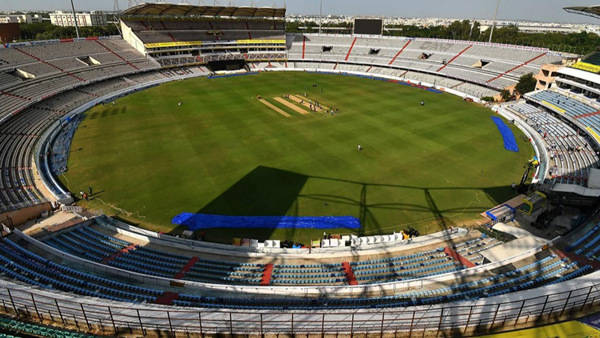
A glaring example is the historic Lal Bahadur Stadium, located in the heart of the city and housing the SATS office itself. The ground has a rich legacy dating back to 1687, when it served as the Mughal army’s camp during the siege of Golconda and was later named Fateh Maidan. Over the centuries, it functioned as polo grounds, a cricket venue, and eventually became Lal Bahadur Shastri Stadium in 1967, hosting several national and international sporting events.
Today, that legacy lies buried under neglect.
Once a vibrant sporting hub, the stadium has now turned into a breeding ground for filth and decay. Patchy grass, uneven surfaces, scattered stones, garbage, and leftover food from private events have made the ground virtually unplayable. Ironically, SATS itself is responsible for this decline, frequently leasing out the stadium for non-sporting events such as film audio launches, social gatherings, and government programmes.
For aspiring athletes, the consequences are severe. Players who come daily for training struggle even to complete basic warm-up routines. Injuries during practice have become common due to the poor condition of the ground. Parents complain that despite paying monthly fees under the “pay and play” scheme, their children rarely get access to the stadium. Events often block the ground for days—handed over a day in advance and rendered unusable for a week after.
An SATS official, speaking anonymously, admitted that government programmes are difficult to refuse due to political pressure, but conceded that private events could be restricted. Yet, for a few extra rupees, a vital sporting asset continues to be compromised—at the cost of athletes’ futures.
A former international player summed up the frustration, saying legal intervention may now be the only option left, as repeated appeals to authorities have fallen on deaf ears. For a state dreaming of Olympic glory, the inability to maintain its own flagship stadium exposes a troubling gap between vision and execution. Until that gap is addressed, Telangana’s golden sporting dreams risk sinking deeper into muddy ground.